






Medically reviewed by Dr. Yury Slepak, DDS, Board-Certified Pediatric Dentist | 20+ Years Experience | Last Updated: September 2026
Fluoride is one of the most studied and most argued-about topics in children's health. Parents in Brooklyn ask us every week whether the fluoride we recommend at a cleaning is actually safe, and whether their child needs it at all. This guide answers both questions directly. It explains what professional fluoride is, what the leading pediatric health bodies say, how the recent fluoride-and-IQ headlines apply (and do not apply) to dental care, and what a fluoride visit at our Brooklyn office looks like.
Yes, Professional Fluoride Is Safe for Kids, and Every Major Pediatric Body Recommends It
The organizations that set pediatric standards agree, and their recommendations line up:
- American Academy of Pediatric Dentistry (AAPD) recommends professional fluoride varnish at routine pediatric dental visits, starting at the first tooth or first birthday.
- American Dental Association (ADA) includes professional fluoride varnish in its evidence-based clinical guidelines for preventing cavities in children.
- American Academy of Pediatrics (AAP) recommends that pediatricians apply fluoride varnish at well-child visits through age 5, even before a child has a regular dentist.
- U.S. Preventive Services Task Force (USPSTF) recommends fluoride varnish for all infants and children from the time the first primary tooth comes in.
The dose in a single varnish application is small, the contact time on the tooth is brief, and meaningful systemic absorption is low.
What a Professional Fluoride Treatment Actually Is and How It Strengthens Enamel
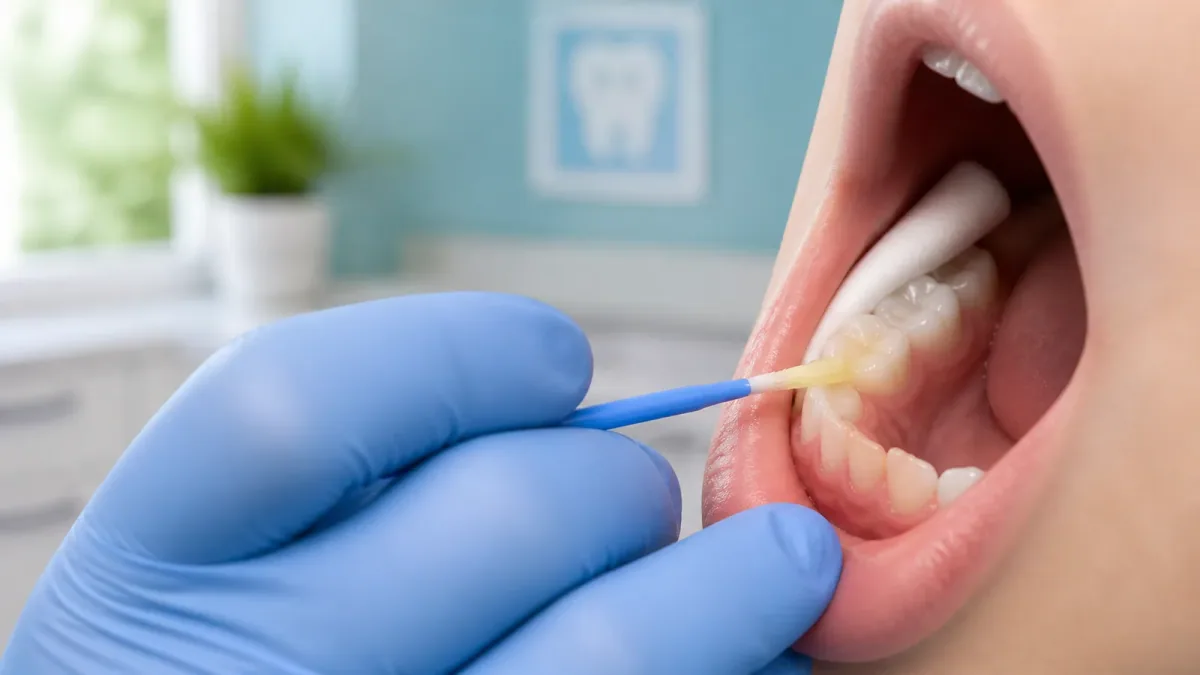
A professional fluoride treatment is a concentrated topical application painted directly onto the surfaces of your child's teeth. The most common form in pediatric dentistry today is fluoride varnish, a sticky resin-based liquid brushed onto each tooth. It sets within seconds when it touches saliva and then stays in contact with the enamel for hours, slowly releasing fluoride.
Fluoride works in three ways:
- It strengthens the outer enamel layer through a process called remineralization.
- It makes teeth more resistant to the acid produced by sugar and bacteria.
- It can reverse very early cavities, the white-spot lesions, before they turn into a hole that needs a filling.
At Bite Squad Dental of NYC, the treatment is built into a regular cleaning. As the team describes their preventive visit, "We use gentle tools to remove plaque and tartar, polish teeth, and apply flavored fluoride gel or varnish to strengthen enamel," using "fluoride varnishes designed for children's teeth."
Fluoride Varnish, Toothpaste, and Tap Water Are Three Different Things at Three Different Doses
Much of the worry about fluoride comes from treating one word as if it means one thing. These sources differ in how they are used, how concentrated they are, and who recommends them:
| Source | How it is used | Concentration | Who recommends it |
|---|---|---|---|
| Professional fluoride varnish | Painted on teeth at the office every 3 to 6 months | High per drop, but a very small total amount per visit | AAPD, ADA, AAP, USPSTF |
| Fluoride toothpaste | Used twice daily at home; rice-grain smear under 3, pea-sized 3 to 6 | Low | AAPD, ADA |
| Fluoride mouth rinse | Optional swish for older, higher-risk kids | Low | AAPD (case by case) |
| Community water fluoridation | Adjusted level in city tap water | Very low, 0.7 mg/L in the U.S. | CDC, ADA, AAP |
| Fluoride supplements | Drops or tablets, only when home water is not fluoridated | Low, prescription only | AAPD, AAP (only when indicated) |
The Fluoride-and-IQ Headlines Studied High Overseas Doses, Not U.S. Dental Care
This is the fear that sends parents searching at night, so here is the direct answer. In 2024 the National Toxicology Program (NTP) published a review that found, with moderate confidence, an association between higher fluoride exposure and lower IQ in children. Those headlines are real. What most headlines left out matters more.
The NTP finding was based mainly on studies from countries such as China, India, Iran, Pakistan, and Mexico, where total fluoride exposure often exceeded 1.5 mg per liter of water. The U.S. Public Health Service sets community water at 0.7 mg/L, less than half that level. The NTP itself did not establish that lower U.S. exposure levels affect IQ, and it did not find a clear dose response at low concentrations.
In April 2026 the American Dental Association reported that newer research reaffirmed that fluoride at recommended levels does not negatively affect IQ, and the American Academy of Pediatrics has stood by its recommendation for low fluoride levels to prevent cavities.
A professional fluoride varnish is a separate matter again. It is a topical dose measured in a fraction of a milliliter, painted on and set on the tooth, not a lifelong daily intake. The IQ studies were about high systemic exposure through drinking water, which is a different exposure from a controlled application at a dental visit.
Dental Fluorosis Comes From Swallowed Toothpaste, Not In-Office Varnish
Dental fluorosis is faint white streaking or speckling on permanent teeth. Mild fluorosis is cosmetic only and does not weaken the teeth. It is almost always caused by repeatedly swallowing large amounts of fluoride toothpaste during the years permanent teeth are forming, roughly under age 8, rather than by professional varnish.
To keep home fluoride in the safe range, the AAPD recommends:
- Under age 3: a rice-grain-sized smear of fluoride toothpaste, brushed by an adult.
- Age 3 to 6: a pea-sized amount, with adult supervision and minimal swallowing.
- For older kids: spit after brushing, do not rinse.
Swallowing In-Office Varnish Is Not a Real Concern Because It Sets in Seconds
Professional fluoride varnish hardens within seconds of touching saliva, so very little is swallowed. The total fluoride in one application is small, typically a fraction of a milliliter, and well within established safety limits for infants and toddlers. The AAPD considers professional varnish safe for children of all ages when a trained provider applies it.
Comfort is the other half of this question, and it is a fair one for a wiggly toddler. As the Bite Squad Dental team answers parents who worry the treatment will taste bad: "No, we use fun flavors that kids enjoy."
Children at Higher Cavity Risk Benefit Most From Fluoride
Every child benefits from professional fluoride, and the benefit is largest for children at higher cavity risk. Common risk factors include:
- A history of cavities or fillings
- Visible plaque on the front teeth
- Frequent snacks or sweet drinks during the day
- A bedtime bottle, pouch, or sippy cup with anything other than water
- Special health care needs that make brushing harder
- Braces, expanders, or other orthodontic appliances
- Reduced saliva flow, which some medications cause
What Happens at Your Child's Fluoride Visit at Our Brooklyn Office
A fluoride visit is fast, gentle, and child-friendly. Here is the sequence:
- Cleaning first. Your child gets a routine pediatric cleaning so the teeth are smooth and plaque-free.
- Drying. The assistant gently dries the teeth with a soft cotton roll or air.
- Painting on the varnish. A small brush applies a thin layer to each tooth, usually in under a minute.
- Setting. Within seconds the varnish hardens into a tacky film when it meets saliva.
- Aftercare. We ask families to skip hot drinks and hard or crunchy foods for the rest of the day, and to wait until the next morning to brush so the fluoride has time to soak in.
Home Fluoride Toothpaste and In-Office Varnish Work Together, Not Instead of Each Other
Toothpaste delivers a small daily dose. Varnish delivers a stronger periodic dose that stays on the enamel for hours. The AAPD does not recommend skipping professional varnish just because a child brushes with fluoride toothpaste at home, especially for a child who has ever had a cavity.
If you have a specific reason to review your child's fluoride (for example, you use only well water, or your child has a kidney condition), raise it before the visit. Dr. Slepak can adjust the plan to your child's individual situation.
What Pediatric Fluoride Costs in Brooklyn and How Insurance Usually Covers It
Most dental insurance plans cover professional fluoride varnish for children up to a set age, often somewhere between 16 and 19 depending on the plan. Because coverage varies by plan and by a child's age and cavity risk, the amount a family pays out of pocket varies too. At Bite Squad Dental of NYC, consultations are free, and since coverage varies by plan, the front desk verifies your benefits before treatment starts. Payment plans are available, and the office takes credit cards, debit cards, and mobile payments. Call (718) 998-2424 with any cost questions before your child's visit and the front desk will walk you through them.
Book a Fluoride Visit in Brooklyn
Bite Squad Dental of NYC provides professional pediatric fluoride varnish at 2464 Coney Island Avenue, Brooklyn, NY 11223, for children from the first tooth through the teen years. We see families from across South Brooklyn, including Sheepshead Bay, Brighton Beach, Coney Island, Gravesend, Bensonhurst, and Midwood. To book a fluoride visit or a routine cleaning that includes fluoride, call (718) 998-2424 or use our online booking form.
Frequently Asked Questions About Fluoride for Kids
At what age should kids start getting fluoride treatments?
The AAPD recommends fluoride varnish starting at the eruption of the first tooth or by the first birthday, whichever comes first. Many pediatricians also apply fluoride varnish at well-child visits before a child has a regular dentist.
How often does my child need a fluoride treatment?
Most children get fluoride varnish every six months, with more frequent applications for kids at higher cavity risk. Dr. Slepak reviews your child's risk at each cleaning and adjusts the schedule.
Does the fluoride and IQ study mean I should refuse fluoride for my child?
No. The 2024 National Toxicology Program review found an association only at high exposure levels above 1.5 mg/L, seen mainly in countries where drinking water carries far more fluoride than U.S. water. U.S. community water is set at 0.7 mg/L, and a professional varnish is a tiny topical dose, not a daily systemic intake. The ADA and AAP continue to recommend fluoride at these levels.
What about dental fluorosis from too much fluoride?
Mild fluorosis, faint white spots on the teeth, is most often caused by swallowing too much fluoride toothpaste while permanent teeth are forming, not by professional varnish. Use a rice-grain smear for children under 3 and a pea-sized amount for ages 3 to 6, and have an adult brush for or with the child.
Can my child swallow fluoride varnish?
The amount is very small, typically a fraction of a milliliter, and it sets quickly on the tooth surface, so very little is swallowed. The AAPD considers professional varnish safe for infants and toddlers when a trained provider applies it.
Does the fluoride treatment taste bad?
No. As the Bite Squad Dental team puts it, "We use fun flavors that kids enjoy." The application takes under a minute, even for a squirmy toddler.
Where can I find pediatric fluoride treatments in Brooklyn?
Bite Squad Dental of NYC at 2464 Coney Island Avenue, Brooklyn, NY 11223 provides professional pediatric fluoride varnish for children of all ages. Call (718) 998-2424 to book.
Sources
- American Academy of Pediatrics, HealthyChildren.org: Fluoride and Children FAQ
- American Dental Association: Fluoride: Topical and Systemic Supplements
- Centers for Disease Control and Prevention: Community Water Fluoridation
- American Dental Association News (April 2026): New research reaffirms recommended fluoride levels do not negatively affect IQ
- American Academy of Pediatrics: Fact Checked: Fluoride is a Powerful Tool for Preventing Tooth Decay
- National Toxicology Program: Fluoride Exposure: Neurodevelopment and Cognition
Disclaimer: This information is provided for educational purposes and is not a substitute for professional medical advice, diagnosis, or treatment. Please schedule a consultation with our team to discuss your individual needs.