








Dr. Yury Slepak, DDS
Board-certified pediatric dentist, Diplomate of the American Board of Pediatric Dentistry
Every parent eagerly awaits the arrival of their baby's first teeth. Beyond creating an adorable smile, these tiny teeth play an essential role in helping children chew, speak, and form the foundation for healthy adult teeth. Understanding their significance is the first step in ensuring your child's long-term oral health. Located at 2464 Coney Island Ave, Brooklyn, NY 11223, we offer comprehensive insights into your child's dental health to support early oral development.
Dr. Slepak is a pediatric dentist with over a decade of experience. Immediately following his graduation from the New York University College of Dentistry with Honors, Dr. Slepak continued his training at Maimonides Medical Center in the Pediatric Dentistry Residency Program.
During his training, he mastered his knowledge and skills in the treatment of children of all ages.
Most babies start getting their first teeth between 4 and 7 months of age. These first teeth are called primary teeth or "milk teeth." They usually begin with the lower central incisors, which are the two front teeth on the bottom.
After that, the upper central incisors, or the top front teeth, typically follow a few weeks later. Every baby is unique, and some may get their teeth earlier or later.
In rare cases, some babies may be born with one or more teeth, called natal teeth. If this occurs, consult your dentist for advice on management. By the time your child is three years old, they should have about 20 primary teeth.
Baby teeth allow your child to chew food properly. This helps break food into smaller pieces so the stomach can digest it more easily.
Baby teeth help your child form sounds and learn to pronounce words correctly. Missing or damaged baby teeth can sometimes make it harder for kids to speak clearly.
Baby teeth act as placeholders for adult teeth. They keep the right amount of space in the jaw for permanent teeth to grow in the right position.
Baby teeth help the jaw develop properly. Chewing and biting stimulate the jawbone, making it grow stronger and healthier.
Baby teeth help maintain the shape of your child's face. Without them, the face may look sunken or uneven, which can affect their overall appearance.
Parents often face challenges when their baby's first teeth start to grow. Here are some common problems and simple solutions to help you manage them:
Babies can feel uncomfortable as teeth push through the gums. Gently massage their gums with a clean finger or give them a cold teething ring to soothe the pain.
Excess drooling can cause rashes around the mouth or chin. Keep the area dry by wiping it often with a soft cloth. Apply a gentle baby moisturizer to protect the skin.
Some babies may get their first teeth later than expected. If no teeth have appeared by their first birthday, consult a dentist to check for any underlying issues.
Some babies resist brushing because their gums feel tender. Use a soft silicone finger brush and sing a song to distract them while cleaning their teeth.
Clean Gums Before Teeth Appear
Use a soft, damp cloth to gently wipe your baby's gums after feeding. This helps remove bacteria and keeps their mouth clean.
Start Brushing as Soon as Teeth Emerge
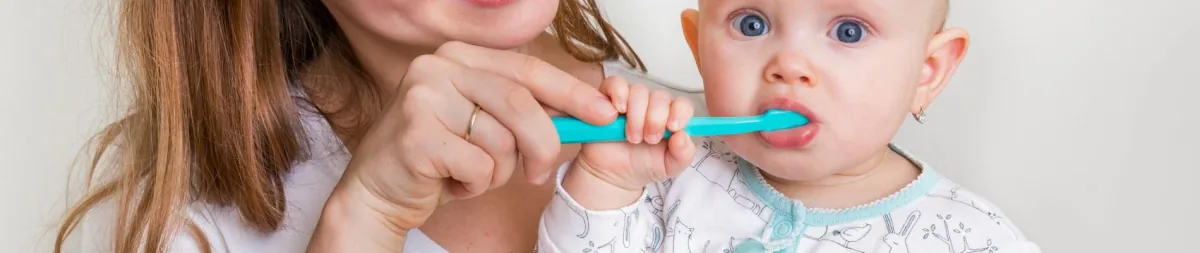
When the first tooth comes in, use a baby toothbrush with soft bristles. Brush gently with a tiny smear of fluoride toothpaste, about the size of a grain of rice.
Avoid Letting Baby Sleep with Bottles
Milk or juice in bottles can pool around the teeth during sleep. This can lead to tooth decay, known as "bottle rot."
Use Teething Rings for Comfort
When your baby is teething, offer a clean, cold teething ring. Avoid teething gels with benzocaine. This is because they can cause a rare but serious condition called methemoglobinemia. It reduces oxygen in the blood.
Schedule the First Dental Visit
Take your baby to the dentist by their first birthday. The dentist can check for any problems and give advice on how to care for tiny teeth.
Using the right tools is important for keeping your baby's teeth clean and healthy. Here's a guide to help you pick the best ones:
Choose a toothbrush with soft bristles and a small head designed for babies. This makes it gentle on their gums and easy to use.
Fluoride toothpaste is commonly recommended by dentists to protect teeth from cavities. Start with a tiny smear, about the size of a grain of rice, and consult your dentist for further guidance.
These brushes fit over your finger and are great for cleaning early teeth and gums. They also help massage sore gums during teething.
Dental wipes are useful for cleaning your baby's mouth on the go. Look for ones made from safe, non-toxic materials.
Your baby's first teeth are vital for their development, and our team is here to support you every step of the way. At our clinic, located at 2464 Coney Island Ave, Brooklyn, NY 11223, we are available to provide guidance and care customized to your child's dental needs. Book an appointment now!
Board-certified pediatric dentist, Diplomate of the American Board of Pediatric Dentistry
Board-certified pediatric dentist
Call (718) 998-2424 or request an appointment online.
Request a Free ConsultationBite Squad Dental of NYC is located at 2464 Coney Island Avenue, Brooklyn, NY 11223, and we support families through every stage of their baby's first teeth across Sheepshead Bay, Brighton Beach, Coney Island, Gravesend, Bensonhurst, Midwood, Flatbush, Borough Park, Canarsie, and Bay Ridge. From teething comfort to that all-important first dental visit by age one, our team is here to help your child's smile get the healthiest possible start.
Ready for your baby's first visit?
Call us to schedule a gentle first-teeth checkup.
Baby teeth are made of enamel, dentin, and pulp. Enamel is the hard, outer layer. Dentin is the layer under it, and the pulp is the soft center with nerves and blood vessels.
Eruption cysts are small, bluish bumps on the gums where a tooth is about to erupt. They usually go away on their own.
Yes, some babies are born with teeth. These are called natal teeth. If natal teeth are loose, cause feeding issues, or pose a risk of choking, your dentist may recommend their removal.
✓ Medically reviewed by Dr. Yury Slepak, DDS, Board-Certified Pediatric Dentist | 20+ Years Experience | Last Updated: April 2026
Medical Disclaimer: This information is provided for educational purposes and is not a substitute for professional medical advice, diagnosis, or treatment. Please schedule a consultation with our team to discuss your individual needs.