
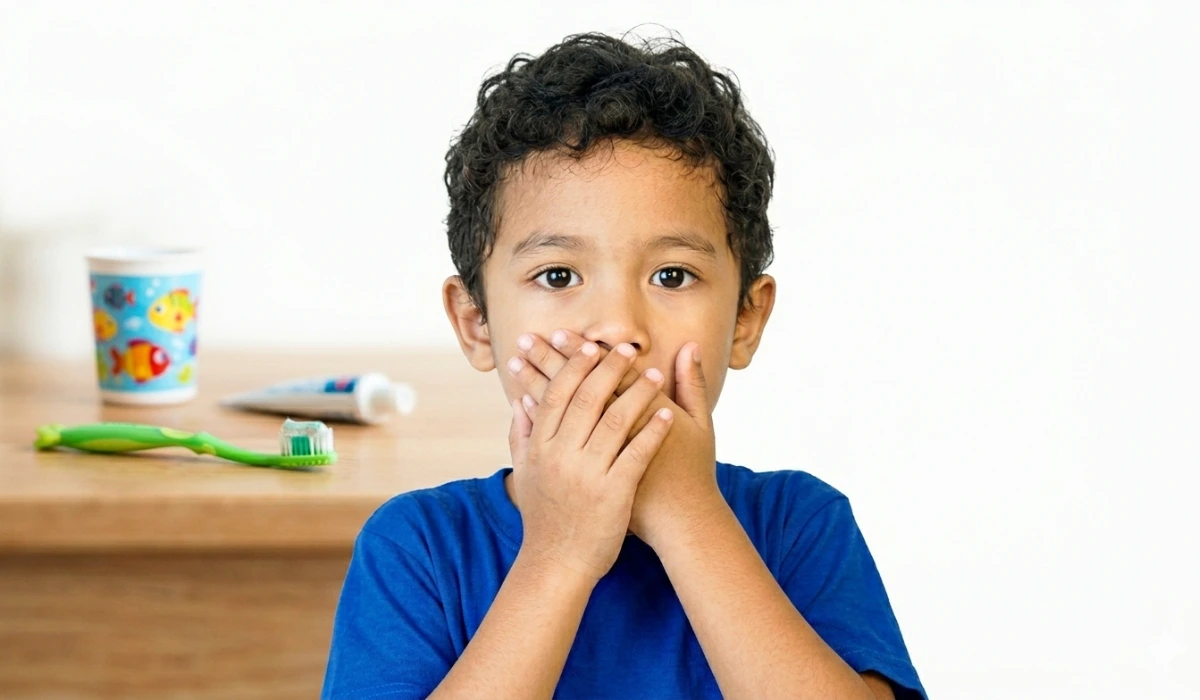
Persistent bad breath in children even after brushing is most commonly caused by bacteria buildup on the tongue, cavities or tooth decay, or mouth breathing. While occasional bad breath is normal, breath that remains unpleasant despite good oral hygiene may indicate an underlying dental or medical issue that needs attention.
Understanding the cause of your child’s bad breath is the first step toward solving it.
What Is Normal vs. Concerning Breath in Children?
Morning breath is normal for everyone, including children. During sleep, saliva production decreases, allowing bacteria to multiply and produce odor. This typically improves after brushing and eating breakfast.
Breath that smells bad throughout the day, returns shortly after brushing, or has a particularly strong or unusual odor may indicate a problem worth investigating.
Dental Causes of Bad Breath in Children
- Bacteria on the tongue. The tongue’s surface is covered with tiny bumps that can trap bacteria, food particles, and dead cells. If your child brushes their teeth but does not clean their tongue, bacteria continue producing foul-smelling compounds.
- Cavities and tooth decay. Decaying teeth harbor bacteria and can produce a distinct unpleasant odor. If your child has untreated cavities, this may be the source of persistent bad breath.
- Food trapped between teeth.If your child does not floss, food particles can remain stuck between teeth and begin to decompose, causing odor. This is especially common in children with tight contact between teeth.
- Gum disease.Though less common in children than adults, gingivitis (gum inflammation) can develop when plaque builds up along the gumline. Inflamed gums can contribute to bad breath.
Why Brushing Alone May Not Be Enough
If your child brushes their teeth but still has bad breath, consider whether they are brushing the tongue, flossing daily, brushing for a full two minutes, and reaching all surfaces of every tooth.
Many children rush through brushing or skip the tongue entirely. Teaching proper technique and supervising brushing until around age 7 or 8 can help ensure thorough cleaning.
Non-Dental Causes of Bad Breath
- Mouth breathing. Children who breathe through their mouths, whether due to habit, allergies, or enlarged tonsils or adenoids, often have dry mouths. Saliva helps wash away bacteria, so a dry mouth allows bacteria to thrive and produce odor.
- Sinus infections or allergies. Postnasal drip from sinus issues or allergies can coat the back of the throat with mucus that harbors bacteria. This can cause bad breath that does not improve with dental care.
- Enlarged tonsils or tonsil stones. The tonsils have crevices where bacteria, food particles, and debris can collect, forming tonsil stones. These stones have a very strong, unpleasant odor.
- Certain foods. Garlic, onions, and other strong-smelling foods can cause temporary bad breath that lingers even after brushing.
- Dehydration. Children who do not drink enough water may have reduced saliva production, leading to dry mouth and bad breath.
- Certain medications. Some medications can cause dry mouth as a side effect, contributing to bad breath.
How to Improve Your Child’s Breath
Brush twice daily for two minutes, including the tongue. Use a soft-bristled toothbrush and fluoride toothpaste. Have your child brush or scrape their tongue gently each time they brush. Floss daily to remove food and plaque from between teeth. Encourage drinking plenty of water throughout the day. Limit sugary foods and drinks that feed odor-causing bacteria. Schedule regular dental checkups to catch cavities and other issues early.
When to See a Dentist vs. a Pediatrician
See a dentist first if your child has bad breath along with visible holes or dark spots on teeth, tooth pain or sensitivity, red, swollen, or bleeding gums, or white coating on the tongue that does not brush away.
See a pediatrician if bad breath persists despite good oral hygiene and dental clearance, your child frequently breathes through their mouth, your child has chronic nasal congestion, allergies, or frequent sinus infections, you notice white spots or stones on the tonsils, or bad breath is accompanied by fever, sore throat, or other symptoms.
Bad Breath Solutions at Bite Squad Dental
At Bite Squad Dental of NYC, we help families identify and address the dental causes of bad breath in children. Dr. Yury Slepak will examine your child’s teeth, gums, and tongue to determine whether cavities, gum issues, or hygiene habits are contributing to the problem.
“Bad breath in children is usually fixable once we find the cause,” says Dr. Slepak. “Often it is something simple like learning to brush the tongue or treating a cavity we find during the exam. When the cause is not dental, we can point families in the right direction for further evaluation.”
Call 718-998-2424 to schedule your child’s appointment, or book online today.
Disclaimer
Medically reviewed by Dr. Yury Slepak, DDS.
This content is for educational purposes only and is not intended as medical advice, diagnosis, or treatment. Please consult a qualified healthcare provider for personalized recommendations.