






Medically reviewed by Dr. Yury Slepak, DDS, Diplomate, American Board of Pediatric Dentistry | 20+ Years Experience | Last Updated: September 2026
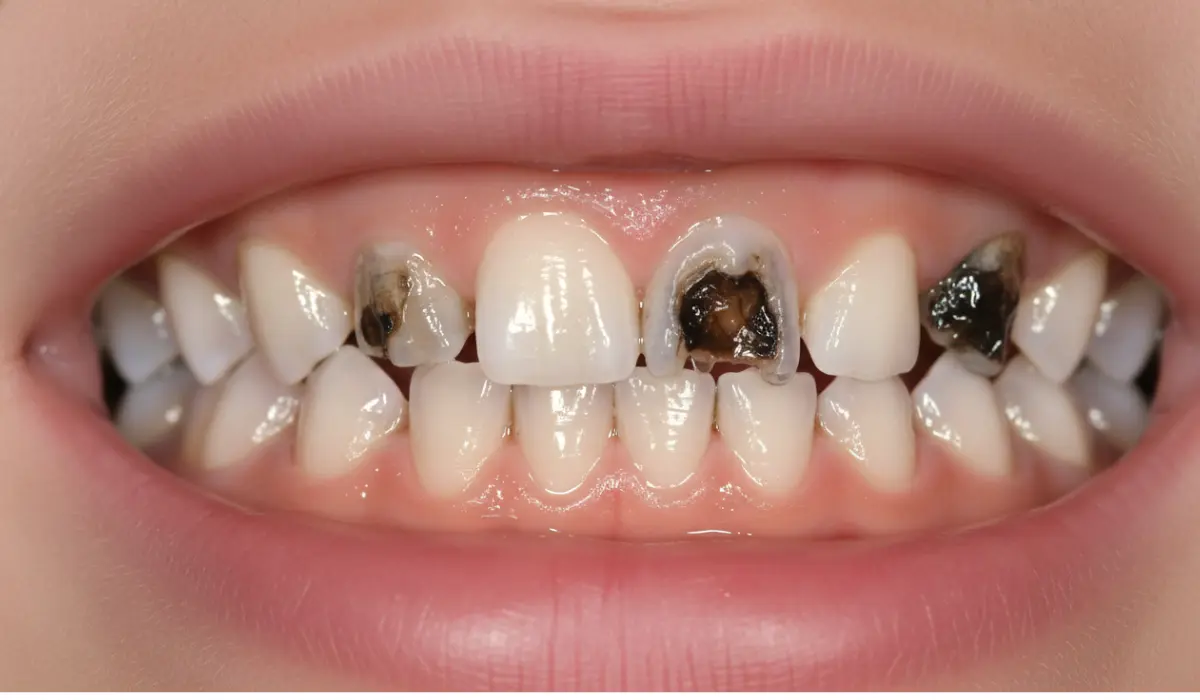
Baby bottle tooth decay is rapid tooth decay in infants and toddlers caused by long exposure to sugary liquids like milk, formula, breast milk, or juice. It shows up first as chalky white spots on the upper front teeth and can spread within months. It is preventable, and at the early white-spot stage it is often reversible with fluoride.
If you have noticed white spots, dullness, or brown areas on your baby's front teeth, this is what you are likely seeing. Dentists also call it early childhood caries, nursing caries, or bottle rot. It is more common than most parents realize, and knowing the warning signs early gives your child the simplest, most comfortable outcome.
Falling Asleep With a Milk or Juice Bottle Is the Leading Cause
Baby bottle tooth decay happens when a child's teeth sit in sugary liquid for long stretches. The main triggers:
- Falling asleep with a bottle. When a baby dozes off with milk, formula, or juice, the liquid pools around the teeth all night. Natural sugars feed mouth bacteria, which produce acid that eats away at enamel. This is the single biggest cause.
- All-day sipping from a bottle or sippy cup. Each sip starts an acid attack that lasts about 20 minutes. Constant sipping means the teeth never get a break.
- Dipping pacifiers in sugar or honey. This puts sugar straight onto the teeth and sharply raises cavity risk.
- Bacteria passed from a caregiver. Cavity-causing bacteria can transfer through shared spoons, cleaning a pacifier in your mouth, or testing food on your lips. Once they settle in your baby's mouth, they add to decay.
- Little or no fluoride. Fluoride strengthens enamel. Children who get little of it are more vulnerable. See our fluoride facts guide for how it protects young teeth.
Baby teeth have thinner enamel than adult teeth, so a small problem can turn serious fast.
Early Signs Are Chalky White Spots Near the Gumline; Brown or Black Teeth Come Later
Catching decay early is what keeps treatment simple. The signs progress in stages:
- Early stage: Chalky white spots or lines on the teeth, usually right along the gumline. These mean the enamel is losing minerals. At this point the damage may still be reversible.
- Progressing decay: The white spots turn yellow or light brown. Teeth start to look dull instead of shiny, and the discoloration spreads.
- Advanced decay: Teeth turn dark brown or black, with visible holes, pits, or crumbling edges. In severe cases teeth can break off. This stage needs professional treatment.
Watch the upper front teeth most closely. They are the first and most visible teeth affected.
Decay Hits the Upper Front Teeth First Because the Bottle Nipple Shields the Lower Teeth
Parents often ask why the top front teeth are hit while the bottom ones look fine. It comes down to how a baby drinks from a bottle.
The nipple rests against the roof of the mouth, so liquid flows over the upper front teeth before it is swallowed. Those teeth get the most direct, prolonged contact with whatever is in the bottle.
Meanwhile the tongue covers and protects the lower front teeth during feeding. The lower teeth also sit in more saliva, which rinses away sugar and neutralizes acid. The upper front teeth get the least saliva protection of all. That is why you often see decay concentrated on the most visible teeth in your child's smile.
White-Spot Decay Can Be Reversed With Fluoride; a Formed Cavity Cannot
Whether baby bottle tooth decay can be reversed depends on how far it has gone.
- Very early decay that looks like white spots may be reversible. The enamel has lost minerals but has not yet formed a hole. With better oral hygiene, less sugar, and professional fluoride, the enamel can remineralize and strengthen.
- Once a cavity has formed, meaning there is an actual hole in the tooth, it cannot heal on its own and needs professional treatment before it spreads.
This is why the white-spot stage matters so much. As Dr. Slepak puts it, "We use gentle tools to remove plaque and tartar, polish teeth, and apply flavored fluoride gel or varnish to strengthen enamel." If you spot any white spots or discoloration, book a visit promptly.
How a Pediatric Dentist Treats Baby Bottle Tooth Decay, From Fluoride to Crowns
Treatment depends on the severity of the decay and your child's age:
- Fluoride treatments can be enough for very early decay that has not formed a cavity. Professional fluoride strengthens weak enamel and can halt early decay.
- Tooth-colored fillings are used once a cavity forms. The dentist removes the decayed part and fills it with composite resin that matches the tooth. Numbing gels and distraction methods keep children comfortable.
- Dental crowns cover teeth with heavy decay. Stainless steel crowns are common on back baby teeth.
- Pulp therapy is needed when decay reaches the nerve. As Dr. Slepak explains, "We remove the infected pulp, disinfect the tooth, and fill it with a biocompatible material to preserve the tooth."
- Extraction is the last resort when a tooth cannot be saved. A space maintainer may then be placed to hold the gap for the permanent tooth.
For children who need extensive work or struggle to sit still, sedation options are available. Bite Squad Dental offers laughing gas for mild anxiety and has hospital sedation privileges for more complex care under general anesthesia. If it is your child's first restorative visit, our guide to a first filling or tooth extraction walks you through what to expect.
Yes, Decayed Baby Teeth Need Treatment Even Though They Fall Out
One of the most common questions parents ask is whether temporary teeth are worth treating. The answer is yes:
- Untreated decay causes pain that makes it hard for a child to eat, sleep, and focus.
- Infection can spread to permanent teeth developing in the jaw right beneath the baby teeth.
- Baby teeth hold space for permanent teeth. Losing one early lets neighbors drift in, which causes crowding later.
- Early dental pain builds fear that can make future care harder.
- Decay can affect speech and nutrition, since baby teeth help children speak clearly and chew.
Treating baby bottle tooth decay protects your child's comfort, development, and long-term oral health.
It Is Not Too Late If Your Child Already Has Bottle Rot
If your baby already shows signs of decay, you can still help them. Treatment is available at every stage, and acting now stops it from getting worse.
Many parents feel guilty when they learn their child has bottle rot. This is a common condition that pediatric dentists see every week, and the job is to help, not to judge. The most important step is to get your child evaluated. The sooner treatment starts, the simpler and more comfortable it is.
As Dr. Slepak notes, "For severe anxiety, we offer laughing gas or mild sedation." He adds, "We customize our approach based on the child's needs, using communication, distractions, or sedation as required." Modern pediatric dentistry has many ways to keep children calm, so worry or guilt should not stop you from getting care.
How to Prevent Baby Bottle Tooth Decay: A Parent Checklist
Prevention is the best approach. These habits protect your baby's teeth:
- Never put your baby to bed with a bottle of milk, formula, or juice. If a bottle helps them settle, fill it with water only.
- Avoid all-day bottle or sippy cup use. Encourage finishing a bottle in one sitting, and move to a regular cup by around 12 months.
- Clean gums and teeth after feedings. Before teeth appear, wipe the gums with a clean, damp cloth. Once teeth come in, brush twice a day with a rice-grain smear of fluoride toothpaste.
- Do not share utensils or clean a pacifier with your mouth, which passes cavity-causing bacteria to your baby.
- Limit juice and sugary drinks. Water and milk are best. Offer any juice at mealtimes in a cup, never a bottle.
- Do not dip pacifiers in sugar or honey. Soothe your baby another way.
- Start regular dental visits by your child's first birthday or when the first tooth appears. As Dr. Slepak recommends, aim for a checkup "at least every 6 months to maintain healthy teeth and gums."
Baby Bottle Tooth Decay Treatment for Brooklyn Families
Bite Squad Dental of NYC treats baby bottle tooth decay and helps families prevent it. Dr. Yury Slepak is a board-certified pediatric dentist with more than 20 years of experience caring for infants, toddlers, and children across Brooklyn.
Our office is built for children, with a gentle, judgment-free approach that puts little ones at ease, and we offer same-day appointments for urgent concerns. For children who need more involved care, we provide sedation options including laughing gas and hospital-based general anesthesia through our hospital privileges. With over 2,000 Google reviews, Brooklyn families trust us for gentle, expert pediatric care.
Call 718-998-2424 or schedule your child's appointment today.
FAQs About Baby Bottle Tooth Decay
Can breastfeeding cause baby bottle tooth decay?
Breast milk contains natural sugars, and prolonged nighttime nursing can contribute to decay if the baby falls asleep while feeding and milk pools around the teeth. Breastfeeding still offers important health benefits. The key is to wipe your baby's gums and teeth after feedings and avoid continuous night nursing once teeth have come in.
At what age is my child no longer at risk for baby bottle tooth decay?
The risk drops once your child stops using bottles and sippy cups and moves to a regular cup, usually around age 2 to 3. Children can still get cavities at any age if diet and hygiene slip, so good early habits protect teeth throughout childhood.
How quickly does baby bottle tooth decay progress?
It can move fast because baby teeth have thin enamel. A small white spot can become a real cavity within a few months if the habits causing it continue, which is why early detection matters.
Can baby bottle tooth decay spread to other teeth?
Yes. The bacteria and conditions that cause decay in one tooth can affect others. Treating the existing decay and changing the habits behind it protects the remaining teeth.
Is baby bottle tooth decay painful for my child?
Early on it may cause no pain. As it moves deeper it can bring sensitivity to hot, cold, or sweet foods, and advanced decay with infection can hurt a lot. Young children may not explain tooth pain well, so watch for fussiness, trouble eating, or touching the face or mouth.
What should I do if I notice white spots on my baby's teeth?
Book a pediatric dental visit as soon as you can. White spots may be early decay that fluoride and better oral care can reverse. Do not wait to see if they worsen, because early action gives the best outcome.
Sources
- American Dental Association, MouthHealthy: Tooth Decay with Baby Bottles
- American Academy of Pediatric Dentistry: Policy on Early Childhood Caries (ECC): Classifications, Consequences, and Preventive Strategies
- National Center for Biotechnology Information: A Review of Early Childhood Caries: Risk Factors, Management, and Policy Recommendations
Disclaimer: This information is provided for educational purposes and is not a substitute for professional medical advice, diagnosis, or treatment. Please schedule a consultation with our team to discuss your individual needs.
About the Author
Dr. Yury Slepak is a board-certified pediatric dentist at Bite Squad Dental in Brooklyn who treats baby bottle tooth decay in infants and toddlers on a daily basis. With over 20 years of experience, he educates Brooklyn parents on prevention strategies including proper bottle habits, fluoride use, and early oral hygiene routines that protect primary teeth from nursing caries.