
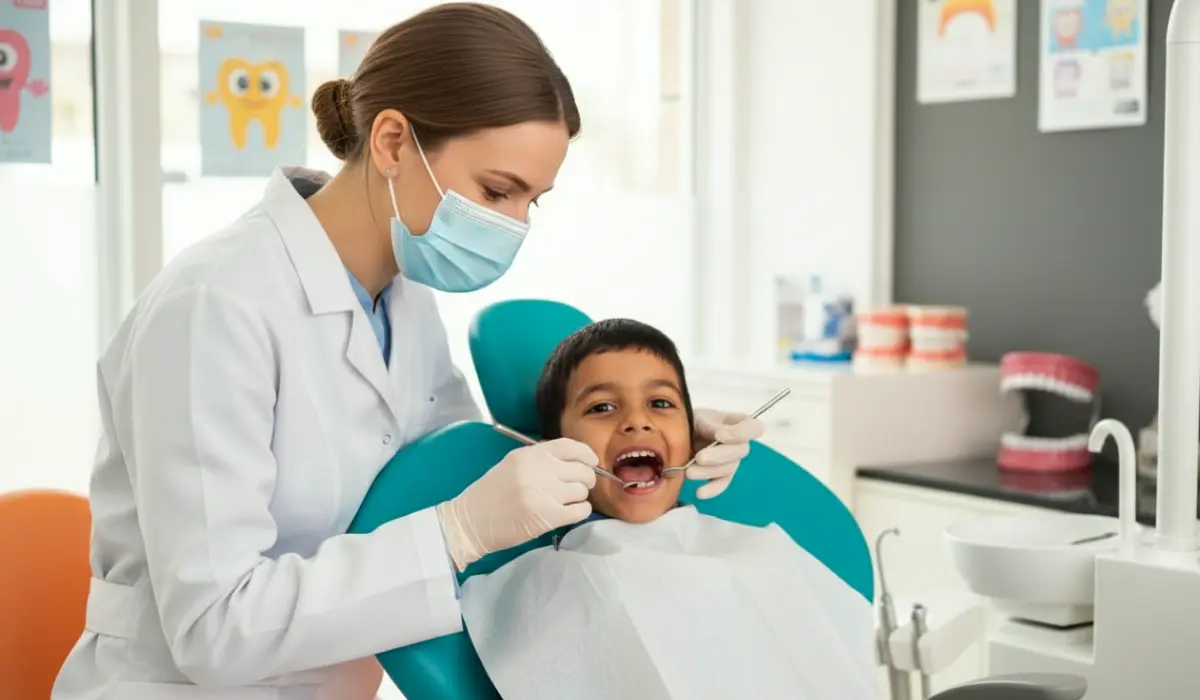
You should take your baby to the dentist by their first birthday or within six months of their first tooth appearing, whichever comes first. This recommendation comes from the American Academy of Pediatric Dentistry and helps establish a foundation for lifelong oral health. Early dental visits allow your pediatric dentist to catch potential problems before they start and help your baby become comfortable with dental care from a young age.
Many new parents are surprised to learn that dental visits should begin so early. After all, babies only have a few teeth at most by their first birthday. But those first teeth are vulnerable to decay from the moment they appear, and early visits set the stage for healthy habits that last a lifetime.
Why Does My Baby Need to See a Dentist So Early?
Baby teeth may be temporary, but they play an important role in your child’s development. They help your baby chew food properly, support speech development, and hold space for the permanent teeth that will eventually replace them. Protecting baby teeth from decay is essential for your child’s comfort and long-term oral health.
Cavities can develop as soon as the first tooth appears. In fact, tooth decay is one of the most common chronic childhood diseases, and it can start in infancy. Early dental visits allow your pediatric dentist to spot the first signs of decay before it becomes a bigger problem.
Beyond checking for cavities, early visits establish what dentists call a “dental home” for your child. This means your baby has a dedicated place for dental care where their history is known and their development can be monitored over time. Building this relationship early helps your child feel comfortable with dental visits rather than fearful.
Early appointments also give you valuable guidance on caring for your baby’s teeth and gums at home. You will learn proper cleaning techniques, get advice on feeding habits that protect teeth, and understand what to expect as more teeth come in.
What Happens at a Baby’s First Dental Visit?
The first dental visit is designed to be quick, gentle, and stress-free for both you and your baby. Most first visits take only about 15 to 20 minutes.
The appointment typically begins with a conversation about your baby’s health history, feeding habits, and any concerns you have noticed. This helps the dentist understand your baby’s individual needs.
Next, the dentist will gently examine your baby’s mouth. This includes checking the teeth that have come in, looking at the gums, and assessing jaw development. The dentist will look for any early signs of decay, gum problems, or developmental concerns.
For very young babies, the exam is often done with your baby lying in your lap with their head resting on the dentist’s lap. This position, sometimes called a knee-to-knee exam, keeps your baby close to you while allowing the dentist a clear view.
“We use gentle tools to examine teeth and gums, and we take time to help babies feel comfortable,” explains Dr. Yury Slepak, board-certified pediatric dentist at Bite Squad Dental of NYC. “Our goal is to make the first visit a positive experience so children learn that dental care is nothing to fear.”
After the exam, the dentist will discuss findings with you and provide personalized recommendations for your baby’s oral care at home. This may include guidance on cleaning your baby’s teeth, advice on bottle and breastfeeding habits, and information about fluoride.
How to Prepare Your Baby for Their First Dental Appointment
A little preparation can help make your baby’s first dental visit go smoothly.
- Schedule at the right time. Choose an appointment time when your baby is typically well-rested and in a good mood. For most babies, morning appointments after breakfast work well. Avoid scheduling during nap time or when your baby is usually hungry.
- Keep it positive. Even though your baby cannot understand your words, they sense your emotions. Stay calm and upbeat when talking about the visit. Your relaxed attitude helps your baby feel secure.
- Bring comfort items. A favorite toy, blanket, or pacifier can help your baby feel more at ease in a new environment. Having something familiar provides reassurance.
- Prepare for the basics. Bring your insurance information, a list of any medications your baby takes, and any questions you want to ask the dentist. Also bring essentials like diapers and a change of clothes, just in case.
- Arrive a few minutes early. Getting there with time to spare lets your baby adjust to the new surroundings before the appointment begins. Our friendly team will help you both feel comfortable.
Do not worry if your baby fusses or cries during the appointment. Pediatric dentists are experienced with young patients and know how to keep babies calm and safe. A little fussiness is completely normal.
What If My Baby Does Not Have Teeth Yet?
Even if your baby’s first tooth has not appeared, it is still a good idea to schedule that first dental visit around their first birthday. Here is why:
The dentist can check your baby’s gum health and jaw development. These early assessments can identify potential issues before teeth even come in.
You will receive guidance on caring for your baby’s gums. Wiping gums with a clean, damp cloth after feedings helps establish good oral hygiene habits and prepares your baby for tooth brushing.
The dentist can discuss what to expect as teeth start coming in. Most babies get their first tooth between 6 and 10 months, but some are earlier or later. Understanding the normal range helps ease any concerns.
If your baby is approaching 12 months without any teeth, the dentist can evaluate whether this is simply normal variation or if there is a reason to monitor more closely.
“We recommend checks every 6 months, starting at age 1 or as soon as the first tooth erupts,” notes Dr. Slepak. “Even before teeth appear, we can assess oral health and provide guidance for parents.”
Signs Your Baby Should See a Dentist Sooner
While the first birthday guideline works for most babies, certain signs indicate your baby should see a dentist sooner.
- White or brown spots on teeth could be early signs of decay. Baby bottle tooth decay can develop quickly, so any discoloration should be evaluated promptly.
- Swollen, red, or bleeding gums may indicate irritation or infection. Healthy gums should be pink and firm.
- Difficulty feeding or unusual fussiness during feeding could signal mouth discomfort. Babies cannot tell you when something hurts, so changes in feeding behavior are worth noting.
- Visible injury to the mouth or teeth from a fall or accident needs immediate attention. Even if the tooth looks fine, the dentist should check for damage you cannot see.
- Delayed tooth eruption may be worth discussing if your baby has no teeth by 12 months. While late teething is often normal, it is good to have it evaluated.
- Excessive drooling with signs of discomfort beyond normal teething may indicate an issue that needs attention.
If you notice any of these signs, do not wait for the scheduled first visit. Call your pediatric dentist to discuss whether an earlier appointment is needed.
How Often Should My Baby Visit the Dentist After the First Appointment?
After the first visit, your baby should see the dentist every six months for regular checkups. This schedule allows the dentist to monitor your baby’s oral development, catch any problems early, and provide preventive care.
During these visits, the dentist will check for cavities, assess how teeth are coming in, and evaluate gum health. As your child gets older, cleanings and fluoride treatments will become part of regular visits.
Consistent dental visits also help your child become comfortable with the dental office. Children who see the dentist regularly from an early age typically have less dental anxiety than those who only visit when there is a problem.
“At least every 6 months to maintain healthy teeth and gums,” confirms Dr. Slepak. “Regular visits let us catch issues early and keep your child’s smile healthy.”
Caring for Your Baby’s Teeth at Home
Good oral care at home supports your baby’s dental health between visits. Here is what the dentist will recommend:
- Before teeth appear, wipe your baby’s gums with a clean, damp washcloth or gauze pad after feedings. This removes bacteria and gets your baby used to having their mouth cleaned.
- Once teeth appear, brush twice daily with a soft-bristled infant toothbrush. Use a tiny smear of fluoride toothpaste, about the size of a grain of rice.
- Avoid putting baby to bed with a bottle of milk, formula, or juice. The sugars in these liquids can pool around teeth while your baby sleeps, leading to decay. If your baby needs a bottle for comfort at bedtime, fill it with water only.
- Limit juice and sugary drinks. Water and milk are the best choices for babies. If you do give juice, limit it to mealtimes and offer it in a cup rather than a bottle or sippy cup.
- Do not share utensils or clean pacifiers with your mouth. Cavity-causing bacteria can be passed from your mouth to your baby’s.
Your Baby’s First Dental Visit at Bite Squad Dental
At Bite Squad Dental of NYC, we specialize in making dental visits positive experiences for babies and young children. Dr. Yury Slepak is a board-certified pediatric dentist with over 20 years of experience caring for Brooklyn families. He graduated with honors from NYU College of Dentistry and completed his pediatric residency at Maimonides Medical Center.
Our Brooklyn office is designed with children in mind. We use a friendly, child-centered approach, explain everything in simple terms, and provide comforting distractions to keep little ones at ease. Parents are always welcome to stay with their baby during the visit.
“We use a friendly, child-centered approach, explain procedures in simple terms, and provide comforting distractions like toys and videos,” says Dr. Slepak. “Our goal is to make every visit positive so children develop good feelings about dental care.”
With over 1,950 five-star Google reviews, Brooklyn families trust Bite Squad Dental for gentle, expert pediatric dental care. We welcome babies, toddlers, and children of all ages.
Call 718-998-2424 to schedule your baby’s first dental appointment, or book online today.
FAQs About Baby’s First Dental Visit
What age is too late for a first dental visit?
It is never too late to start dental care, but earlier is better. If your child is past their first birthday and has not seen a dentist yet, schedule an appointment now. The dentist can evaluate their oral health and get them on track with regular care.
Will my baby cry at the dentist?
Some babies do cry in unfamiliar situations, and that is completely normal. Pediatric dentists are trained to work with young children and know how to keep them calm and safe. A quick exam does not take long, and most babies settle down quickly.
Do I stay with my baby during the exam?
Yes, at Bite Squad Dental, parents are welcome to stay with their baby throughout the visit. Your presence provides comfort and reassurance.
How do I clean my baby’s teeth before their first visit?
Use a soft infant toothbrush with a rice-grain-sized smear of fluoride toothpaste twice daily. Before teeth appear, wipe gums with a clean, damp cloth after feedings.
Does the first dental visit cost a lot?
Many dental insurance plans cover preventive visits for children. We recommend checking with your insurance provider about coverage. Our team can also help verify your benefits before your appointment.
What if my baby will not cooperate during the exam?
Pediatric dentists are experienced with babies who wiggle, fuss, or cry. The exam is gentle and quick. Do not worry if your baby is not perfectly cooperative. Our team knows how to work with young patients of all temperaments.
Disclaimer
Medically reviewed by Dr. Yury Slepak, DDS.
This content is for educational purposes only and is not intended as medical advice, diagnosis, or treatment. Please consult a qualified healthcare provider for personalized recommendations.
