
Medically reviewed by Dr. Yury Slepak, DDS – Diplomate, American Board of Pediatric Dentistry | 15+ Years Experience | Last Updated: March 2026
A pediatric dentist completes two to three years of additional specialized training after dental school, focusing exclusively on treating children from infancy through adolescence. This extra training covers child psychology, behavior management, sedation techniques, and the unique dental needs of developing teeth and jaws. A regular dentist, also called a general dentist, treats patients of all ages but does not have this specialized pediatric training.
Understanding the difference between these two types of dentists can help you make the best choice for your child’s oral health care.
What Additional Training Do Pediatric Dentists Have?
After completing four years of dental school, a pediatric dentist must complete an additional two to three years of residency training in an accredited pediatric dentistry program. This residency focuses entirely on treating infants, children, adolescents, and patients with special healthcare needs.
During this training, pediatric dentists learn child psychology and development to understand how children think, communicate, and respond to dental treatment at different ages. They study behavior management techniques that help anxious or uncooperative children feel comfortable during dental visits. They receive extensive training in sedation dentistry, including nitrous oxide (laughing gas), oral sedation, and general anesthesia, which are sometimes necessary for young children or children with special needs. They also learn how to treat dental trauma, which is common in active children, and how to manage the unique challenges of developing teeth and jaws.
This specialized training prepares pediatric dentists to handle situations that general dentists may not encounter as frequently.
What Is Board Certification in Pediatric Dentistry?
After completing residency, pediatric dentists can pursue board certification through the American Board of Pediatric Dentistry. Board certification requires passing rigorous written and oral examinations that test knowledge and clinical judgment in pediatric dentistry.
A board-certified pediatric dentist has demonstrated expertise beyond the minimum requirements for practicing pediatric dentistry. While all pediatric dentists have specialized training, board certification represents an additional level of verified competence.
How Are Pediatric Dental Offices Different?
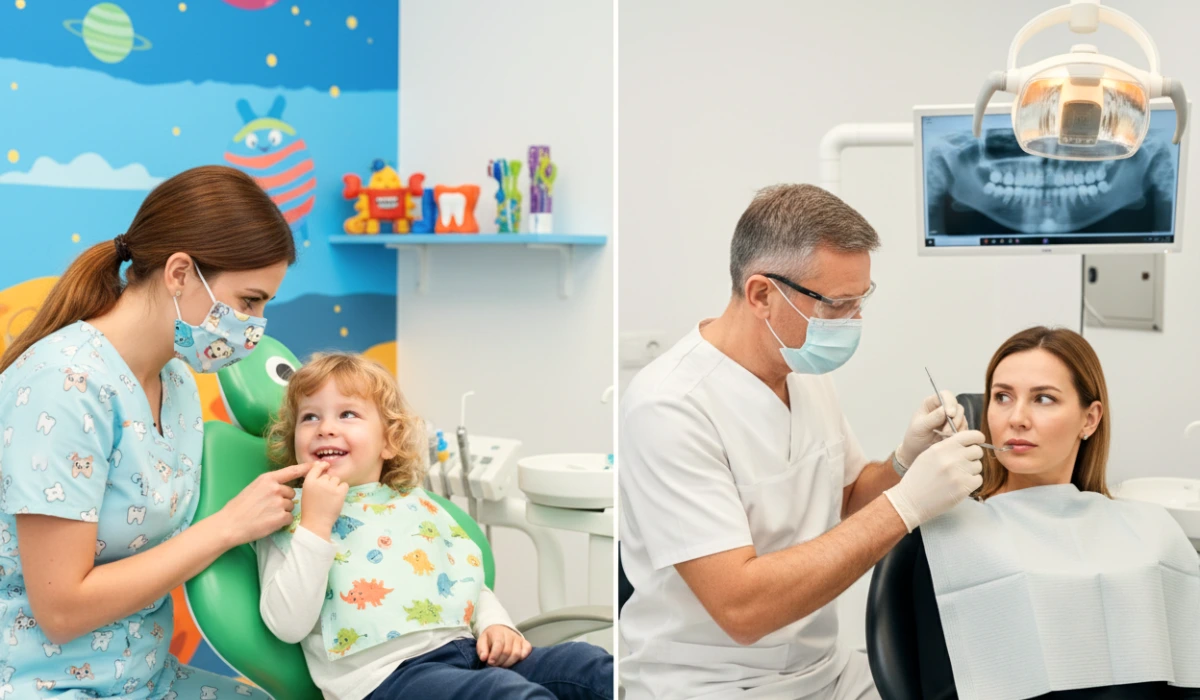
Pediatric dental offices are designed specifically for children. The waiting rooms typically feature kid-friendly decor, toys, books, and games that help children feel comfortable and reduce anxiety. Treatment rooms may have ceiling-mounted televisions, colorful decorations, and child-sized equipment.
The staff at a pediatric dental office is trained to work with children of all ages and temperaments. They know how to explain procedures in age-appropriate language, use positive reinforcement, and help nervous children feel at ease.
General dental offices, while welcoming to families, are designed to serve patients of all ages and may not have the same child-focused environment.
What Services Do Pediatric Dentists Provide?
Pediatric dentists provide all the dental services children need, including preventive care like cleanings, fluoride treatments, and dental sealants, restorative care like fillings and crowns, emergency care for dental injuries, early orthodontic evaluation, habit counseling for thumb sucking or pacifier use, and treatment for children with special healthcare needs.
Because of their specialized training, pediatric dentists are also equipped to provide sedation options that may not be available at a general dental practice. For children who are very young, very anxious, or have extensive dental needs, sedation can make treatment safer and more comfortable.
When Should a Child See a Pediatric Dentist vs. a General Dentist?
The American Academy of Pediatric Dentistry recommends that children see a dentist by their first birthday or within six months of their first tooth erupting. For this first visit and throughout early childhood, a pediatric dentist is often the best choice because of their specialized training in infant and toddler care.
Children who have dental anxiety, special healthcare needs, or complex dental problems may benefit from seeing a pediatric dentist throughout childhood. The behavior management techniques and sedation options available at a pediatric dental office can make dental care possible for children who might otherwise struggle.
Some families choose to have their children see a general dentist, particularly if the practice is family-friendly and the child is comfortable. This is a personal decision that depends on your child’s needs and your family’s preferences.
At What Age Should a Child Transition to a General Dentist?
There is no set age when a child must transition from a pediatric dentist to a general dentist. Many pediatric dentists treat patients through age 18 or even into early adulthood for patients with special needs.
The right time to transition depends on the child. Some teenagers prefer to see a general dentist who treats adults. Others continue with their pediatric dentist until they leave for college. Your pediatric dentist can help you decide when the time is right and can recommend a general dentist when your child is ready.
Does Insurance Cover Pediatric Dentists?
Most dental insurance plans cover pediatric dentists the same way they cover general dentists. Pediatric dentists are licensed dentists, and their services are typically covered under your plan’s dental benefits.
If you have questions about coverage, check with your insurance provider. Some plans may have a network of preferred providers, so it is worth confirming that your chosen pediatric dentist is in-network.
Pediatric Dental Care at Bite Squad Dental
At Bite Squad Dental of NYC, we specialize exclusively in pediatric dentistry. Dr. Yury Slepak is a board-certified pediatric dentist with extensive experience treating children from infancy through adolescence.
Our Brooklyn office is designed with children in mind, from our welcoming waiting area to our kid-friendly treatment rooms. We offer a full range of pediatric dental services, including preventive care, restorative treatment, and sedation options for children who need them. Dr. Slepak holds hospital privileges at three area hospitals, allowing us to provide general anesthesia for children who require it.
“Every child deserves a positive dental experience,” says Dr. Slepak. “Our specialized training allows us to meet children where they are, whether that means using gentle behavior guidance for a nervous toddler or providing sedation for a child with special needs. We want every visit to build trust and set children up for a lifetime of good oral health.”
With over 1,950 five-star Google reviews, Brooklyn families trust Bite Squad Dental for expert, compassionate pediatric dental care.
Call 718-998-2424 to schedule your child’s appointment, or book online today.
FAQs About Pediatric Dentists vs. General Dentists
Can a general dentist treat children?
Yes, general dentists are trained to treat patients of all ages, including children. However, they do not have the additional specialized training in child behavior management, sedation, and pediatric-specific conditions that pediatric dentists receive.
Is a pediatric dentist more expensive than a general dentist?
Fees vary by practice and location. In many cases, the cost of routine services like cleanings and exams is similar between pediatric and general dentists. Insurance coverage is typically the same for both.
My child is not anxious at the dentist. Do they still need a pediatric dentist?
A child who is comfortable at the dentist can be treated by either a pediatric dentist or a general dentist. The choice depends on your preferences and your child’s specific dental needs.
What does board-certified mean?
Board certification means the dentist has passed additional examinations administered by the American Board of Pediatric Dentistry, demonstrating expertise beyond the requirements for licensure.
How do I know if my child needs sedation?
Your pediatric dentist will evaluate your child’s needs and discuss sedation options if appropriate. Sedation may be recommended for very young children, children with significant anxiety, children with special healthcare needs, or children who need extensive dental work.
About the Author
Dr. Yury Slepak is a board-certified pediatric dentist at Bite Squad Dental in Brooklyn who completed specialized residency training in pediatric dentistry at NYU Langone. With over 15 years of experience treating children exclusively, he helps families understand why specialized pediatric dental training makes a measurable difference in their child’s comfort, safety, and long-term oral health outcomes.
Disclaimer
Medically reviewed by Dr. Yury Slepak, DDS.
This content is for educational purposes only and is not intended as medical advice, diagnosis, or treatment. Please consult a qualified healthcare provider for personalized recommendations.
