
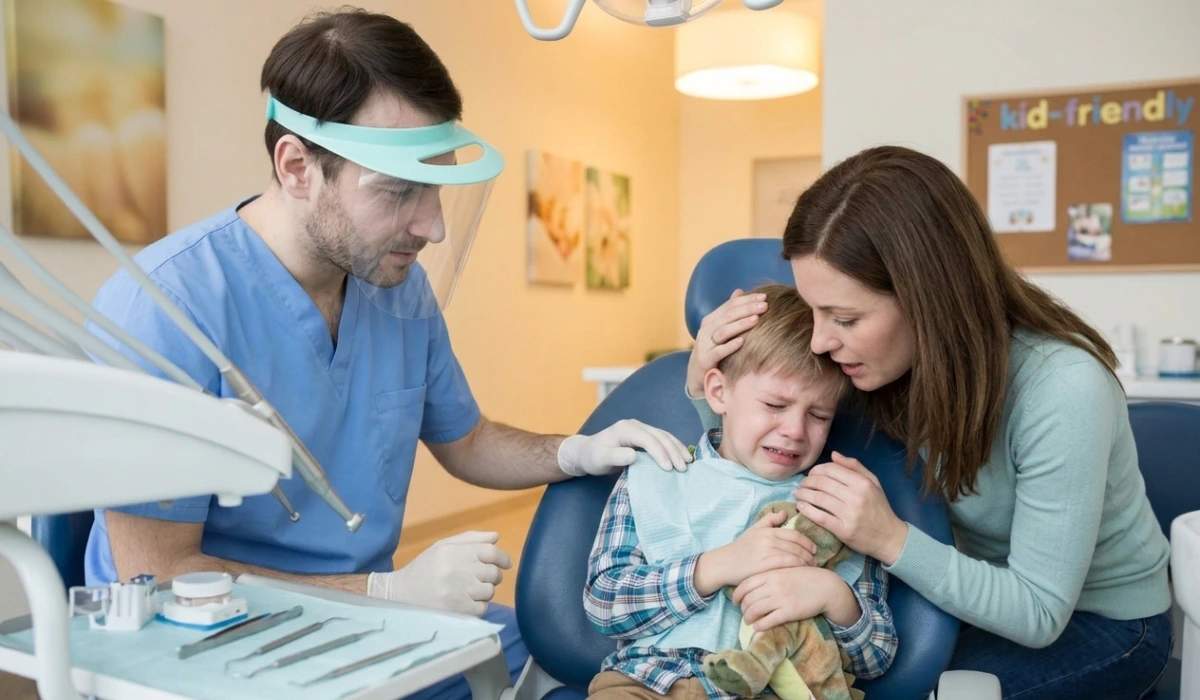
If your child is scared of the dentist, the most important things you can do are stay calm yourself, use positive language when discussing dental visits, and choose a pediatric dentist experienced in helping anxious children. With the right preparation and a supportive dental team, most children can overcome their fear and have positive dental experiences. For children with severe anxiety, sedation options are available to ensure they receive the care they need.
Dental anxiety in children is common, but it does not have to prevent your child from getting proper dental care. Understanding why children fear the dentist and knowing how to help can make all the difference.
Why Are Children Afraid of the Dentist?
Children can develop dental fear for many reasons. Fear of the unknown is one of the most common. Young children do not understand what happens at a dental visit, and the unfamiliar environment, sounds, and equipment can be overwhelming. Previous negative experiences, whether at the dentist or in other medical settings, can create lasting anxiety. Some children are sensitive to having people in their personal space or touching their face and mouth. Others pick up on anxiety from parents or siblings who have their own dental fears. Hearing scary stories from friends or seeing negative portrayals of dentists in movies and television can also contribute.
The good news is that dental anxiety is treatable. With patience and the right approach, most children can learn to feel comfortable at the dentist.
How to Prepare Your Child Before the Appointment
Preparation begins at home, well before the dental visit. Talk to your child about the appointment using simple, positive language. Explain that the dentist is a friendly helper who keeps teeth healthy and strong. Avoid using words like pain, hurt, shot, or drill, which can create fear even if your child has not experienced these things.
Read children’s books about going to the dentist. Many picture books show characters having positive dental experiences and can help normalize the visit. Role-play at home by pretending to be the dentist and counting your child’s teeth, or let your child be the dentist and examine a stuffed animal’s teeth.
Answer your child’s questions honestly but simply. If they ask if something will hurt, you can say that some things might feel a little funny or uncomfortable, but the dentist will be gentle and help them feel okay.
What to Say and What to Avoid
The words you use matter. Positive framing helps reduce anxiety.
Instead of saying the dentist will check for cavities, try the dentist will count your teeth and make sure they are healthy and strong. Instead of this will not hurt, which actually introduces the idea of pain, try the dentist will be very gentle. Instead of be brave or do not be scared, which implies there is something to fear, try I will be right here with you.
Avoid making promises you cannot keep, such as they will not do anything you do not want. The dentist may need to do things your child is not excited about, and broken promises can damage trust.
Do not bribe your child with treats or make the visit seem like a big deal that requires rewards. This can signal that there is something unpleasant to endure. Instead, keep your tone matter-of-fact and confident.
How Pediatric Dentists Help Anxious Children
Pediatric dentists are specially trained to work with children who have dental anxiety. They use techniques designed to help children feel safe and comfortable.
Tell-show-do is a common approach where the dentist explains what they will do, shows the child the instrument or demonstrates on a model, and then performs the procedure. This removes the fear of the unknown.
Distraction techniques include ceiling-mounted televisions, music, or conversation to keep the child’s mind occupied during treatment.
Positive reinforcement involves praising the child for cooperation and bravery, which builds confidence for future visits.
Voice control uses a calm, reassuring tone to help children feel secure.
Pediatric dental offices are designed to be welcoming for children, with colorful decor, toys, and a friendly atmosphere that reduces anxiety.
Should Parents Stay in the Room?
Policies vary by practice, and there is no single right answer. Some children feel more secure with a parent present, especially for their first few visits. Other children do better without a parent in the room, as they may be more cooperative with the dental team and less likely to look to a parent for rescue.
Your pediatric dentist can help you decide what is best for your child. If you do stay in the room, your role is to be a calm, supportive presence. Let the dental team take the lead and avoid interrupting or answering questions directed at your child.
Sedation Options for Severe Dental Anxiety
For children with severe anxiety, sedation dentistry can make dental care possible. There are several levels of sedation available.
Nitrous oxide, commonly called laughing gas, is a mild sedative inhaled through a small mask over the nose. It helps children relax while remaining fully conscious and able to respond. The effects wear off within minutes after the mask is removed.
Oral sedation involves medication taken by mouth before the appointment. The child remains awake but is drowsy and relaxed. This option is helpful for children who need more than nitrous oxide but do not require deep sedation.
General anesthesia is used for children with extreme anxiety, very young children who cannot cooperate, children with special healthcare needs, or those who need extensive dental work. Under general anesthesia, the child is completely asleep and unaware of the procedure. This is performed in a hospital setting or a dental office equipped for anesthesia.
Your pediatric dentist will discuss which option is appropriate based on your child’s age, anxiety level, and dental needs.
When Does Dental Anxiety Become a Phobia?
Most children experience some level of nervousness about the dentist, and this is normal. However, if your child’s fear is so intense that they cannot complete dental visits, have physical symptoms like vomiting or panic attacks, or avoid dental care entirely, they may have a dental phobia.
Dental phobia is a clinical condition that may benefit from professional help beyond what the dental office can provide. Talk to your pediatric dentist and your child’s pediatrician about resources such as child psychologists or therapists who specialize in anxiety and phobias.
Helping Anxious Children at Bite Squad Dental
At Bite Squad Dental of NYC, we specialize in helping children who are anxious about dental visits. Dr. Yury Slepak and our team are trained in behavior management techniques that help nervous children feel comfortable and safe.
We take time to build trust with each child, using tell-show-do, distraction, and positive reinforcement to create positive experiences. For children who need additional support, we offer nitrous oxide, oral sedation, and general anesthesia at affiliated hospitals.
“Every child can have a positive dental experience with the right approach,” says Dr. Slepak. “We never force a child through treatment. Instead, we work at their pace, building trust and confidence with each visit. For some children, that means starting slowly. For others, sedation allows us to complete treatment safely and comfortably. Our goal is for every child to leave feeling proud of themselves.”
With over 1,950 five-star Google reviews, Brooklyn families trust Bite Squad Dental for compassionate care for anxious children.
Call 718-998-2424 to schedule your child’s appointment, or book online today.
FAQs About Children and Dental Anxiety
At what age can children overcome dental fear?
There is no specific age. With positive experiences and supportive care, many children become more comfortable over time. Some children overcome fear quickly, while others need more gradual exposure.
Should I tell my child about the appointment in advance?
For most children, a day or two of advance notice is helpful. Telling them too far in advance can give anxiety time to build. Very anxious children may do better with shorter notice. You know your child best.
What if my child cries or refuses to open their mouth?
This is common, especially for young children or first visits. A skilled pediatric dentist will know how to respond. Sometimes taking a break, using distraction, or trying a different approach works. For some children, rescheduling and trying again is the best option.
Is sedation safe for children?
When administered by trained professionals, dental sedation is safe for children. Your pediatric dentist will review your child’s medical history, explain the risks and benefits, and monitor your child throughout the procedure.
Can I stay with my child during sedation?
Policies vary. For nitrous oxide, parents can usually stay in the room. For oral sedation or general anesthesia, parents typically wait in a recovery area and are reunited with their child as soon as they begin to wake up.
How can I help my child after a difficult dental visit?
Focus on the positive. Praise your child for the things they did well, even if the visit did not go perfectly. Avoid dwelling on the difficult parts. Talk about how next time might be easier now that they know what to expect.
Disclaimer
Medically reviewed by Dr. Yury Slepak, DDS.
This content is for educational purposes only and is not intended as medical advice, diagnosis, or treatment. Please consult a qualified healthcare provider for personalized recommendations.
