






Medically reviewed by Dr. Yury Slepak, DDS, Board-Certified Pediatric Dentist | 20+ Years Experience | Last Updated: July 2026
Start one to two weeks out. Call the office first and describe your child's triggers and what calms them, then ask for a familiarization visit and the first appointment slot of the day. At home, walk your child through the visit using pictures and simple, literal words, and practice lying back and opening wide for a toothbrush. On the day itself, bring the comfort items and a written list of triggers, and treat a calm exit as the win, even if the actual cleaning waits until next time.
Most of the work happens before you ever reach the parking lot. Here's the whole sequence.
Call the Office Before You Book
The phone call is the part most families skip, and it changes the visit more than anything you do at home.
Tell whoever answers that your child has special needs, and be specific about what that means in a dental chair. Say the diagnosis if you have one. Then give them the practical version: your child covers their ears at high-pitched sounds, or cannot tolerate the taste of fluoride paste, or bites when startled, or goes still and silent instead of protesting so a "compliant" child may actually be overwhelmed.
Ask the office directly what they can accommodate. A longer appointment. A quieter room. A first-thing-in-the-morning slot. Whether you can stay in the room. Whether they will let your child sit in the chair once, with nothing done, before any real appointment. If you are still deciding between offices, what to ask before you book covers the longer list of questions.
Write down what they say. If the answers are vague, that's information too.
Explain the Visit in Language Your Child Actually Uses
Children who need routine and predictability do badly with surprises, and a dental visit is a stack of surprises: new room, new person, new smell, a chair that moves, a light in the face, hands in the mouth.
Break it into a sequence and use the same words every time you tell it. "We drive to the dentist. We sit in the waiting room. A person calls your name. You lie back in a chair that leans. The dentist counts your teeth. Then we go home." Literal beats reassuring. Avoid "it won't hurt," because a child who hears the word "hurt" has now been handed a new idea, and if anything does feel strange, you've spent the trust.
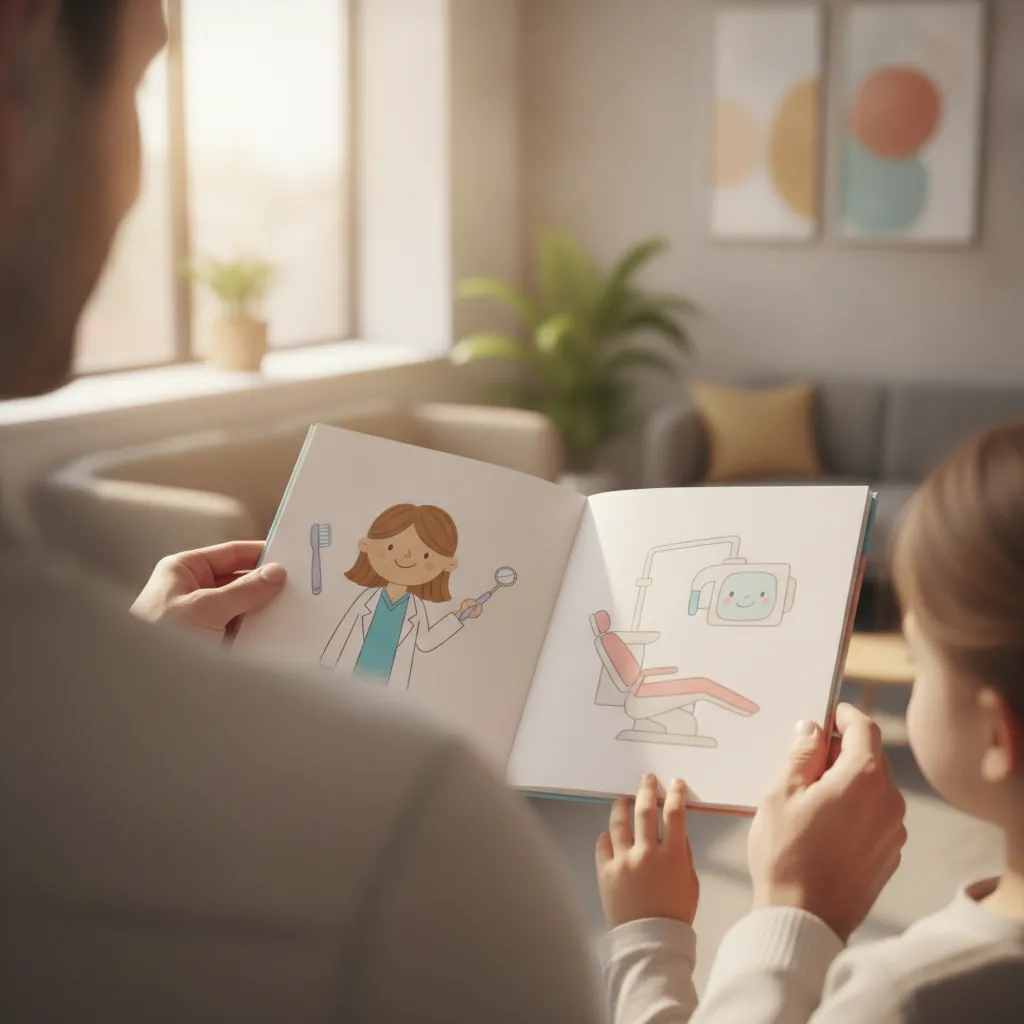
Photos help more than words. Most dental sites have pictures of the office and the team, and you can pull them up on a phone days ahead so the room and the face are already familiar. A social story, meaning a short picture-by-picture script of what happens in order, works for the same reason.
Then practice. Have your child lie back on the couch while you count their teeth with a toothbrush. Let them do it back to you, or to a stuffed animal. Shine a small flashlight in their mouth. Children who have rehearsed the physical position often tolerate the real chair far better, because the body already knows the shape of it.
Ask for a Familiarization Visit First
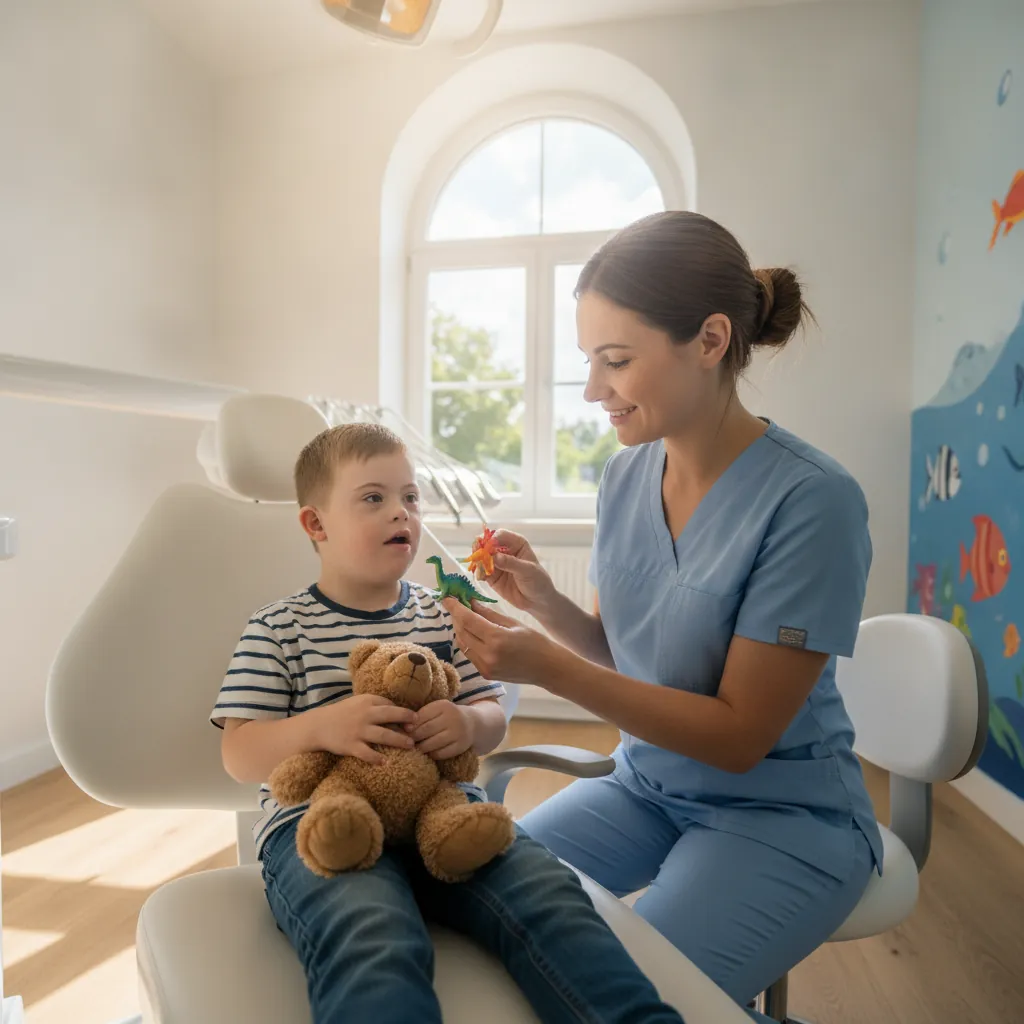
A familiarization visit, sometimes called a happy visit or a desensitization visit, is a short appointment with no treatment at all. Your child walks in, sees the room, meets the team, maybe sits in the chair, and then goes home. Nothing else happens.
For a lot of children this is the single highest-value thing you can do, because it removes the entire category of the unknown before any dental work is on the table. It also gives the team a chance to meet your child on a day when nothing is being asked of them.
Bite Squad Dental of NYC offers pre-visit familiarization sessions for exactly this. Ask for one when you call.
Time the Appointment Around Your Child's Day
Book the first slot of the day when you can. The office is quietest, the schedule has not yet slipped, and the waiting room is at its emptiest. For a child who is dysregulated by noise, crowding, and waiting, the waiting room is often the hardest part of the visit, and a morning appointment shrinks it.
Then plan the day around your child's rhythm:
- Pick a time when your child is usually calm, fed, and rested. Right after a nap or a meal is often better than late afternoon.
- Keep the rest of the day ordinary. A visit stacked on top of an already unusual day is a visit stacked on top of an already stretched child.
- Check the medication schedule. If your child takes something that affects attention or agitation, ask their pediatrician how the appointment should sit relative to a dose.
- Ask what your child can eat first. Before a routine cleaning the answer is usually different than before sedation, which has fasting rules, so confirm rather than guess. Our guide on whether your child can eat beforehand walks through both.
- If the waiting room is a known trigger, ask whether you can wait somewhere quieter, or in the car, and have the office call or text you when the room is ready.
What to Bring
Pack for the appointment the way you'd pack for a flight.
- Comfort items: a favorite stuffed animal, a fidget, a weighted blanket, a preferred blanket or hoodie.
- Noise-cancelling headphones or earplugs. The suction and the polisher are the two sounds most often reported as intolerable.
- Sunglasses or a hat for the overhead light, which is brighter than most people expect.
- Your child's communication tools: an AAC device, a PECS board, picture cards, whatever they use at school.
- A written list, on paper, of triggers, calming strategies, medications, and medical history. Hand it over at check-in. A list survives the visit even when the room gets loud and nobody can hear each other.
What Happens If Your Child Melts Down or Will Not Open
This is the question most parents are actually carrying, and it deserves a straight answer.
An office set up for special-needs care expects this and plans for it. Nothing gets forced. A visit can be slowed down, split into pieces, or stopped, and a child who only made it into the chair today has still moved forward. The goal of a first visit is a calm exit, because a child who leaves calm comes back, and a child who leaves traumatized often will not sit for anyone for years.
If accommodations alone are not enough, there is a ladder, and offices work up it in order rather than jumping to the top. Laughing gas, or nitrous oxide, takes the edge off while your child stays awake and wears off within minutes of the mask coming off. Oral conscious sedation is the next step, where a child is drowsy but responsive. IV sedation is used more selectively. For extensive treatment, or for a child who cannot be treated comfortably in the chair at all, dental work can be done at a certified hospital, where a pediatric anesthesiologist administers and monitors general anesthesia while the dental team completes the work in one setting.
One distinction there is worth knowing before anyone offers it to you: the dentist does the dentistry, while a pediatric anesthesiologist administers and monitors the general anesthesia. You can read how treatment at a certified hospital is arranged.
"I love that they were not annoyed by his behavior being scared and over the top"
After the Visit, Set Up the Next One
Whatever happened, close the loop while it's fresh.
Tell your child what went well, specifically, rather than in general praise: "You sat in the chair and you opened your mouth." If a reward helps your child, give it regardless of how much treatment actually got done. What you're reinforcing is the showing up.
Then write down what worked and what did not, and give that to the office. Ask to keep the same room and the same team next time, since consistency is doing a lot of the work here. If you can, book the next appointment before you leave the building, while your child is still associating the place with an ending they survived.
Special-Needs Dental Visits at Bite Squad Dental of NYC
Care at Bite Squad Dental of NYC is led by board-certified pediatric dentists Dr. Yury Slepak and Dr. Jessica Borukhova, alongside pediatric dentist Dr. Yelena Gofman. Dr. Slepak founded the practice and has spent more than 20 years treating Brooklyn children, including children with autism, ADHD, Down syndrome, and sensory processing differences.
The accommodations described above are how the office runs, not exceptions you have to negotiate for. Appointments can be extended so there is room to go slowly and take breaks. Rooms can be kept quiet to lower the sensory load. Sensory-friendly tools and visual aids are on hand, and pre-visit familiarization sessions can be scheduled before any treatment day. A parent is welcome to stay in the room the entire visit. The front desk and providers speak English, Spanish, Ukrainian, and Russian, so you can describe what sets your child off in the language you think in.
"My child has major sensory issues he was able to withstand a deep cleaning from this incredible dentist!!!"
"I love this office, the place is very clean and tidy, everyone is very professional and understands the children, my girls have ADHD and Autism"
If a visit somewhere else went badly, or your child was turned away, that is the situation this office is built for. Consultations are free. Call (718) 998-2424, read how sensory-friendly dental care for children with special needs works here, or call or message our Brooklyn office to talk through your child's needs before you book anything.
Preparing for Your Child's Visit?
Call us and describe what sets your child off. We will plan the appointment around it, and you can ask for a familiarization visit before any treatment day.
Frequently Asked Questions
Can I stay in the room with my child?
Yes. A parent is welcome to stay with their child through the whole visit at Bite Squad Dental of NYC. For many children, having you in the room is the accommodation that makes the rest of them work.
How far in advance should I start preparing?
One to two weeks is enough for most children. That gives you time to make the phone call, schedule a familiarization visit, tell the story a few times, and practice the position at home without turning the appointment into a countdown that builds its own anxiety.
My child is nonverbal. How will the dentist communicate?
Bring the communication system your child already uses, whether that is an AAC device, a PECS board, or picture cards, and tell the office in advance that your child is nonverbal so the team can plan around it rather than discover it in the chair. Ask them to narrate to your child anyway, in short literal steps, since receptive language is often stronger than expressive language.
What if a dentist already told us they could not treat my child?
That usually says more about how that office was set up than about your child. Pediatric dentistry is the specialty trained for children with special health care needs, and the accommodations, sedation options, and hospital pathway exist precisely for children who cannot get through a routine appointment in a general dental chair.
Should my child brush before the appointment?
Yes, if it's part of their normal routine and doesn't turn into a fight. A familiar toothbrush at home in the morning is a gentle rehearsal for what happens in the chair a few hours later.
Disclaimer: This information is provided for educational purposes and is not a substitute for professional medical advice, diagnosis, or treatment. Please schedule a consultation with our team to discuss your child's individual needs.